
How do you document the moment a first customer signs up?
by Richard Lovatt · updated 19 October 2026
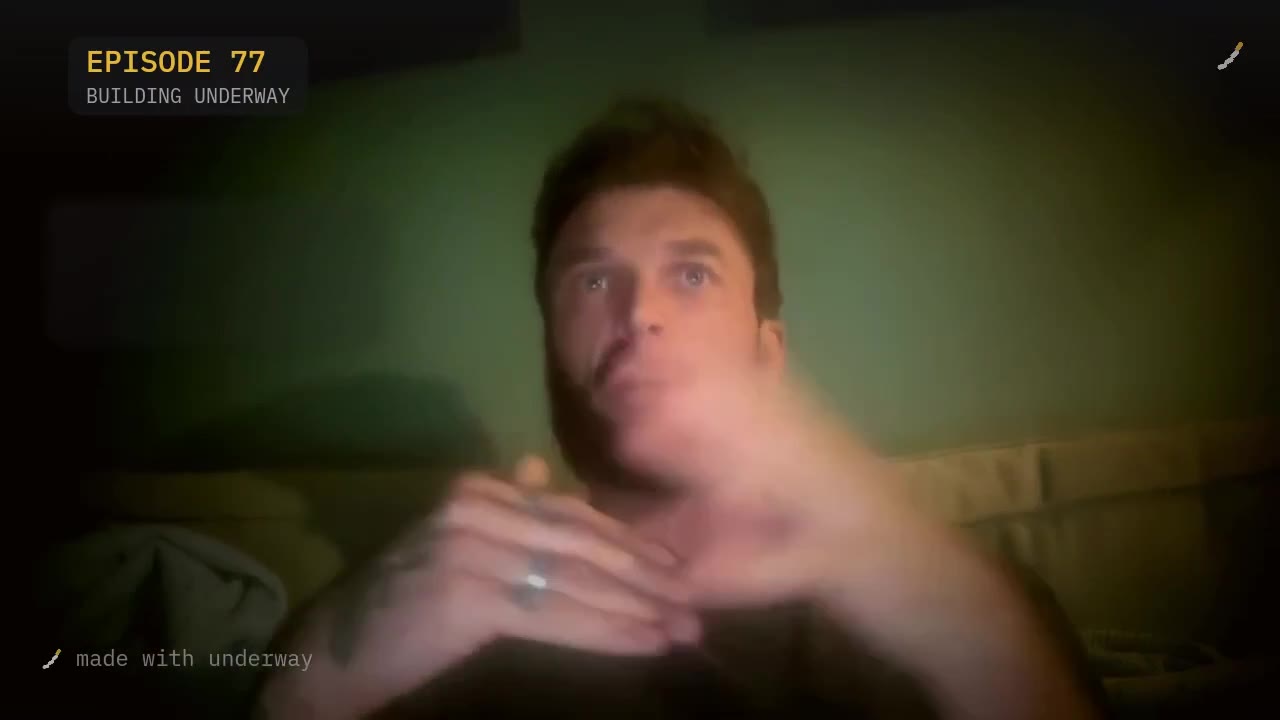
Film it the day it happens, in your own voice, and show the proof on screen. I did this with Underway, the app I built: it reads my connected tools, asks me about the day out loud, and hands back a finished numbered episode with no editing. So when my first paying customer landed mid-record, the episode existed minutes later.
In short
- The first-customer moment lasts minutes and never comes back, so record it the same day rather than writing it up later.
- Say the small details out loud: direct signup, no trial, business email, the exact feeling.
- Nobody filmed Jeff Bezos getting his first order, which is the whole reason I document from the start.
- Underway reads your day and interviews you, so the episode gets made on the day it matters instead of waiting for an edit.
Why the first customer is worth filming at all
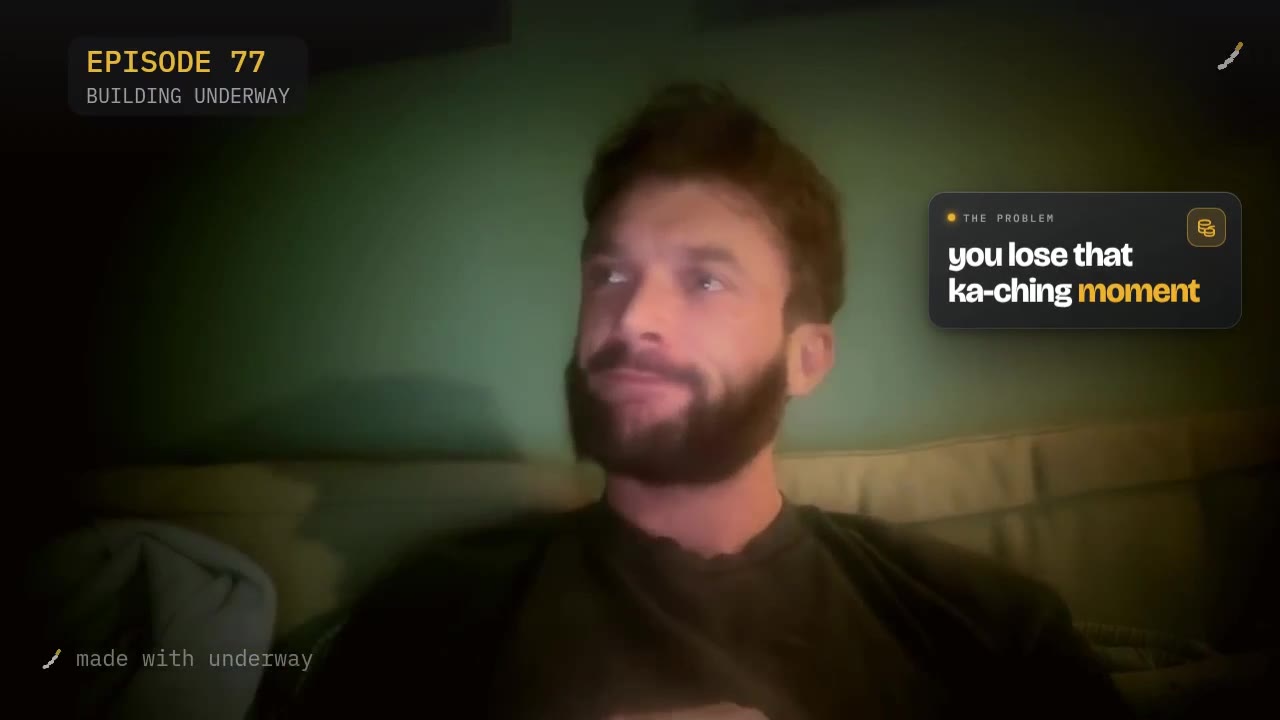
There is something about this feeling that is hard to get back. It was like making my first sale in my sales job many, many years ago. I remember the feeling of it, and since then I have just done that over and over again, so you lose that ka-ching moment. That is good in a way, you get used to it because you get really good at it. But it means the first one is the only one you will ever feel like that.
What makes it different from a sale in a job is what sits behind it. You spent time building a bit of software, learning, knowing you created something that solves an issue, and then some random person on the internet saw your stuff and thought, yes, I need it. That is not a number on a dashboard. That is a stranger deciding your thing is worth paying for.
The practical argument is simple: the moment is short. It happens once, it happens on a particular afternoon, and if you are not recording that day it is gone. A write-up a year later is a memory of a feeling, not the feeling. This is the same reason I started the series in the first place. I document from the start so I can see all of those moments: when it is hard, when I wake up a bit dejected, when things go well and I have added a new thing. Getting your first customer is one of the monumental ones.
Let's think about it. Jeff Bezos never recorded this moment. Wouldn't it be so cool to watch Jeff Bezos get his first customer and see how he felt? Nobody points a camera at a business that has not worked yet, so that record does not exist, for him or for almost anyone.
And I am not putting on excitement for the camera. My fiancée will tell you I do not show excitement ever. The one thing that gets me going is achievement, my own achievement. I am spurred on by my own goals. That is what you are capturing: not the money, the achievement.
What usually stops people recording it
Everyone means to keep a record of the thing they are building. Almost nobody does. The camera, the edit and the retakes kill it inside a week, so the start is never filmed, and the first-customer moment is exactly the kind of thing that gets missed because it lands in the middle of a working day.
The reasons repeat. The blank page: you sit down, look at the camera, and have nothing to say. The edit: that is hours of your day gone. The risk: you cannot put this in public yet, maybe not ever. The silence: who would even watch, with no audience and no hook. The script: you feel you have to write something first and you are not a writer. Each one is enough on its own to stop you on the day it matters.
There is a timing problem on top of that. A first payment often arrives while you are doing something else. If filming it means setting up lights, writing an intro, recording three takes and then opening an editor that evening, you will tell yourself you will do it tomorrow. Tomorrow it is old news and you skip it.
The options people try, and where each falls short
Meaning to film it and never starting is the most common one. There is nothing to show for it later, which is the whole loss.
A written journal or a notes app does capture the facts, and a tool like Day One is built for exactly that. What it cannot keep is your voice, your face and how you actually sounded on the day. Underway is the spoken version of that, cut into a numbered episode.
Posting an update on X or LinkedIn is quick but it is a post in a feed. It gets buried, it is out of order, and a year later you cannot sit and watch the sequence back.
Recording clips and leaving them unedited on your phone is better than nothing, and it is where most people stop. The footage sits there because nobody wants to cut it. Hiring or learning an editor fixes that and introduces a bigger cost: a studio tool like Riverside is built for produced interviews, and an editor like Descript is a text-based editor you still have to learn and use. Loom gives you one-off screen clips, but it does not read your day or turn the clips into an ongoing show. Jellypod puts AI hosts on pasted text, which is not your own voice answering about your own day.
That gap is why I built Underway. It reads the tools you work in, asks you about your day out loud, and hands back a finished, numbered video or podcast episode with no editing. No timeline, no retakes, no edit at all.
How I filmed it, step by step
First, record on the day, not after. My first paying customer landed mid-record, so the episode became the moment rather than a report on it. If it lands while you are working, stop and film it there. The room does not need to be lit and you do not need an opening line.
Second, say what actually happened, in order and in plain words. First paying customer. Explaining why this one feels different from the hundredth. That is the episode.
Third, show the proof on screen. I opened the tab and showed it. There it is, there is your proof. Seeing it does more than describing it.
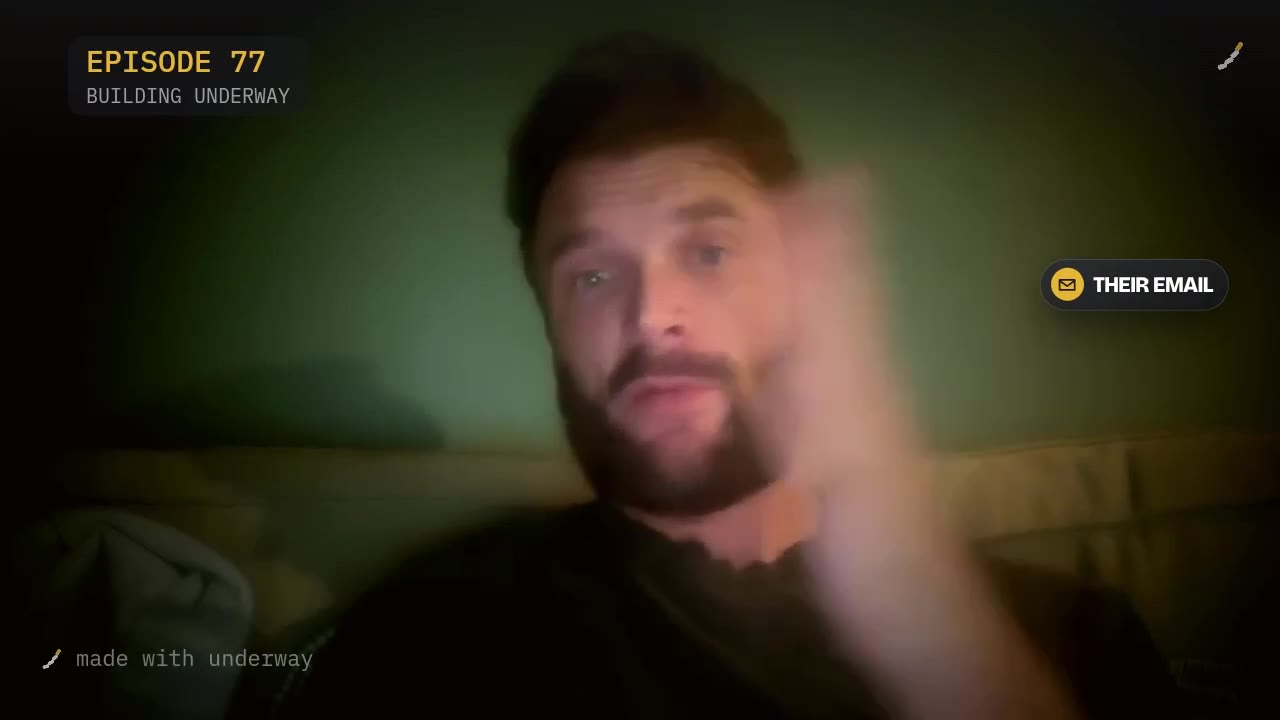
Fourth, say the details that make it specific. When it comes through on Whop you can see the customer's email, and this one was attached to a business email. I looked at it and thought, this is the actual perfect customer, the most perfect person in their job role and what they do for what I want. He also signed up direct, no trial. I am assuming here because I do not know him, a complete stranger, but he saw everything and said, I am paying straight away. Maybe one day I can get him on and do an interview.
Fifth, record the surrounding context while you are there. I also had a bunch of people signed up on a trial, meaning they had put their card in, coming through every day. That felt like more skin in the game, and it is the build-up that the first payment sits on top of.
Showing the proof without showing the customer
Proof is what turns a claim into a record. On the day, I showed the payment notification itself, which is enough. Anyone watching can see it is real.
If there is a story worth more later, ask. I would happily get that first customer on for an interview one day if he is up for it, which is a far better use of his name than putting it on screen without asking.
What it costs in time
The filming itself is minutes. I talked about what had just happened, opened one tab to show it, and that was the episode. There is no script to write and no second take.
The edit is the part that normally eats the day, and with Underway there is none. You talk once and the finished episode arrives minutes later, numbered, with the captions written. Nothing is reordered and nothing is invented: the cut keeps what you said, in the order you said it.
Setup is a one-off. You write one line about what you are making, connect the tools you already use so the questions know your day, and record episode zero. Connections are read-only: they shape the questions, never the footage, and only you appear in an episode.
The ongoing cost is a few minutes a day, which is the point. If capturing the first customer had required an afternoon, I would not have captured it.
Who this suits, and who it does not
It suits solo founders building something now, especially people who believe documenting matters and have tried and stopped because of the camera, the edit or having nothing to say. It suits anyone making anything: a shop, a studio, a band, a workshop. The wish to have filmed the start is the same, and so is the fear of the camera.
It suits people who are not ready to be public. You can record in stealth: everything goes into the vault and stays private until you choose to share it, and then you can share the lot at once, in order.
It does not suit you if you do not want to speak. A written journal will serve you better. It does not suit you if you want a produced podcast with a script, guests and an editor, in which case use a studio. Off camera is fine here: answer by voice and it is still a numbered episode.
And it is honest to say where this stands. I am one founder with a series running daily and a small number of paying and trialling customers. The first payment was a genuine first, which is exactly why it was worth filming.
Questions people ask
What should I actually say on camera when the first sale comes in?
Say what happened and how it feels, in that order. Name the moment, show the payment confirmation on screen, then say the details that make it yours: whether they came direct or from an ad, whether they took a trial, what kind of customer they look like. You do not need a hook or a tidy ending.
What if I missed the moment and want to film it afterwards?
Film it anyway, and say plainly that you are recording it a day or two late. It is still far better than nothing. The reason to set this up early is that the next milestone, the first trial, the first refund, the tenth customer, will also arrive mid-day, and you want to be ready for that one.
Do I have to publish it?
No. Episodes go into the vault and stay private until you choose to share them, so you can record in stealth through the early period and release everything later, in order. That also means you can film honest moments you are not ready to show yet.
What makes Underway different from just recording a clip on my phone?
A clip on your phone sits there unedited, which is where most people stop. Underway reads your connected tools first so you never face a blank camera, interviews you out loud about what actually changed, and returns a finished numbered episode minutes later with captions written. You never open an editor.
Does it only work for software founders?
No. It works for anything you are making: a shop, a studio, a band, a workshop. You write one line about what you are working on and the questions fit your world. The connections are optional, so a maker with no commits can still record a series.