
Article
build in public without twitter: where to post in 2026
30 September 2026 · 8 min read
Post on Xthe short version
yes, you can build in public without twitter. the idea was never about one platform. it was about showing the work as it happens, regularly, to people who might care. in 2026 there are better homes for that than a thread.
the places that keep your work findable: youtube, a podcast feed and your own page. the places with the conversation: linkedin for customers, investors and hires, reddit for other builders. the places with reach: reels and tiktok. and a newsletter for the few people who want every word.
you don't need to write for seven platforms. you need one recording of what happened, and different words around it for each place it goes.
why people want to build in public without twitter
for a long time, build in public meant x. revenue screenshots, launch threads, an audience made mostly of other founders. a thread on indie hackers from 2020 asking how to do it without twitter still has hundreds of replies, so this is not a new question. it has just got louder.
the reasons people give are consistent. posts with links travel less far there, by most accounts. everything becomes a thread. the audience is often founders selling to founders, which is fine if that is your market and useless if you run a bakery. and some people simply don't like being there.
none of that is a reason to stop building in public. it is a reason to put the work somewhere it lasts longer than a day.
where to build in public without twitter, platform by platform
each of these has a job. few people need all of them. the table first, then the detail.
| good for | format | what to post | |
|---|---|---|---|
| youtube | being found by search for years, holding a story in order | shorts for short episodes, a normal video for longer ones | each episode, a weekly recap, one playlist oldest first |
| podcast feed | people who listen on a walk or in the car | audio, questions kept in | every episode as sound, submitted once to apple podcasts and spotify |
| customers, investors and hires who check you out | a native video with a first-person post | the episode and what you learned, no thread structure | |
| honest feedback from other builders | an uploaded video with a plain title and body | a weekly update in a builder community, no links, no pitch | |
| reels and tiktok | reaching people who don't follow you yet | portrait video, captions burned in | short episodes with a caption and a few hashtags |
| your own page | one address that holds everything, that no platform can take away | every episode in order, with its own page | everything, with episode 0 at the top |
| newsletter | the people who want every word | a written article | a weekly or monthly write-up with a link to the episodes |
youtube. the best single home for a build, because it is a search engine as well as a feed. a video from month one still gets found in month twelve by someone typing the problem you solved. short episodes go up as shorts, a weekly recap as a normal video, all of it in one playlist so a newcomer can start at the beginning.
the podcast feed. the cheapest distribution there is. a podcast is an rss feed: submit the address once to apple podcasts and spotify and every episode lands there from then on, with no per-platform api that can change under you. it is also the lowest-effort way to show up at all. no lighting, no framing, recordable from a car.
reddit. the least forgiving and some of the most honest build in public writing anywhere. communities like r/buildinpublic reward weekly updates with the real numbers and punish anything that reads like marketing. read each community's rules first. there is a full guide at /build-in-public-on-reddit.
reels and tiktok. where video reaches strangers. portrait, captions burned in, a number on the front so a new viewer knows it is a series, and a caption written for the platform. the same file serves both.
your own page. the one place on this list nobody can take away. no algorithm, no api review, no platform changing its mind. every episode in order, a start-here at the top, one link to give anyone.
newsletter. small and loyal. a written version of the week for the people who would rather read. it is the one place where a longer article beats a video.
build in public on linkedin instead of x
linkedin is where a lot of people who leave x end up, and for a lot of founders it is the better fit. the people reading are the people who buy, invest and apply. a build log there is a track record with your name on it.
- write in the first person, as one post. linkedin is not threads; a thread pasted in reads like it came from somewhere else.
- upload the video natively rather than linking to it elsewhere. it plays in the feed where a link gets scrolled past.
- say what happened, then what you learned from it. the lesson is what gets shared; the detail is what makes it believable.
- leave out the humblebrag. "thrilled to announce" is the linkedin version of a hook, and it reads the same way.
- a wide video is the traditional linkedin shape, but a portrait one plays fine too. use what you filmed.
underway writes a linkedin post for every episode, first person with no thread structure, from what you said. on the series plan, post to linkedin on the episode page posts the video with that text to your own profile, and update on linkedin changes the words afterwards.
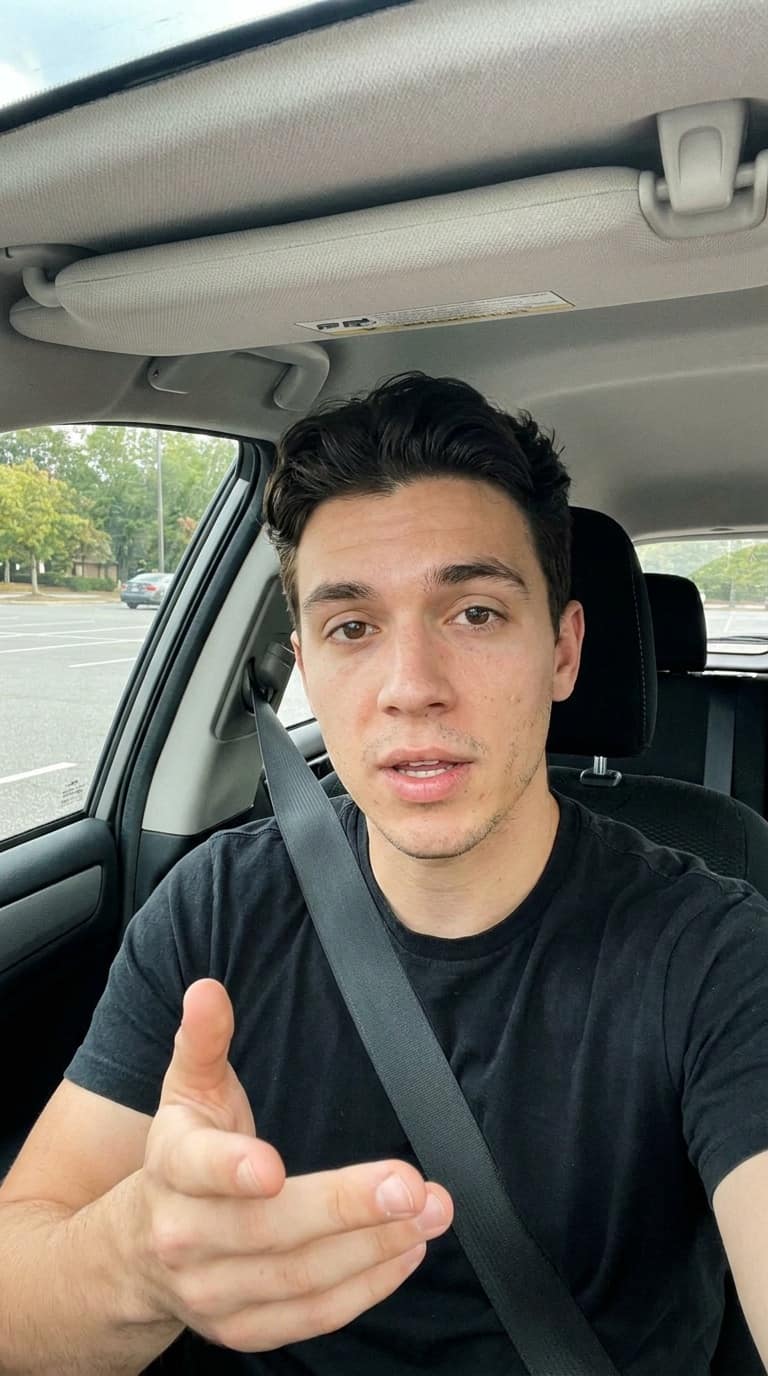
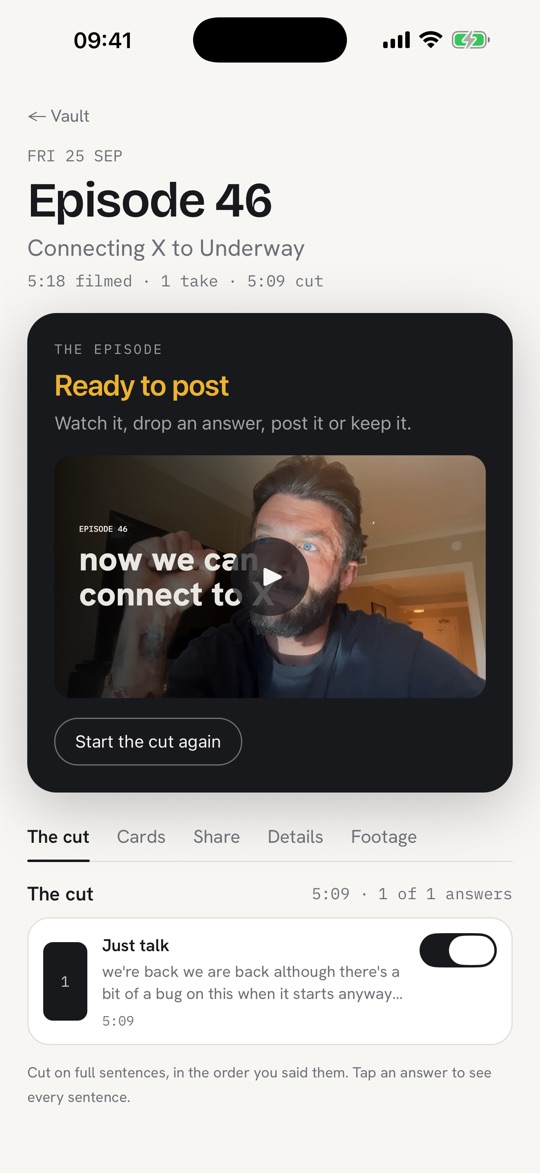
one recording, different words for each platform
the mistake is writing seven posts. the other mistake is pasting one post seven times. the recording is the thing. what changes per platform is the words and the framing around it, which is cheap once you have a transcript.
a portrait video already serves reels, tiktok, shorts and snap. a wide one is the youtube and linkedin shape. you rarely need a separate cut per platform when a separate caption will do.
underway writes the whole set from the transcript of each episode, all to the same outline so the story is the same wherever it lands: a line that places the episode, why a stranger should care, what happened, what else it covers, and who it is for. the set is:
- a youtube description, the fullest of them, with chapters
- a linkedin post, first person, no thread
- one caption for tiktok and instagram, hashtags on the last line
- a reddit post with its own title, no links, nothing that reads like a pitch
- a title and show notes for the podcast
- a longer article for a blog or a newsletter
- an x thread and a line or two for snap, if you still use them
nothing in any of them is invented. no number you didn't say, no outcome that didn't happen. read each one before it goes; it is your name on it.
what posts for you, and what you post yourself
honestly, because it changes what the week looks like:
- your own page: once your series is public, each new episode goes on it as soon as its file is made. there is a switch to turn that off, and any episode can be held back.
- youtube, linkedin and instagram: one press each from the episode page on the series plan, or post everywhere for all the ones you ticked. never on their own.
- tiktok: tiktok is still reviewing underway for public posting, so for now the button is marked in review and you post there yourself with the caption from the episode.
- the podcast feed: on series, publishing an episode carries its audio to every podcast app that subscribes.
- reddit: post to reddit opens reddit with the title and the words filled in. you add the video and press post, because every community sets its own rules.
- newsletter and snap: copy and paste.
- on the founder plan, every set of words is written and you post them to your own accounts.
which to start with
not all seven. pick one place that keeps things and one place with a conversation, and add the others once the habit is real.
- if you sell to businesses: your own page, youtube and linkedin.
- if you sell to consumers: your own page, reels and tiktok.
- if you are building something technical for other builders: your own page, youtube and reddit.
- if you would rather not be on camera: the podcast feed, with your page behind it.
whatever you pick, the rules don't change when you leave x. keep it going at a rhythm you can hold. number episodes, not days. keep things in the order they happened. put the bad weeks in. the people who stay are the ones who want to know what happened next, and they find you on any platform.
faqs
can you build in public without twitter?
yes. youtube, a podcast feed, linkedin, reddit, reels and tiktok, your own page and a newsletter all work, each for a different audience. the work is the same; only the words around it change.
is linkedin good for building in public?
for anyone selling to businesses, raising or hiring, often better than x. write first person as one post, upload the video natively, and say what you learned as well as what happened.
what is the best platform to build in public in 2026?
youtube, if you have to pick one, because videos keep being found through search and a playlist holds the whole story in order. pair it with one place that has a conversation, like linkedin or reddit.
do i have to make different content for each platform?
no. make one recording and change the words. a portrait video serves reels, tiktok and shorts; the caption, the linkedin post and the youtube description are what differ.
i already have an audience on x. should i leave?
no need. keep posting the thread there if it works, and add a place where the work lasts longer than a day. underway writes the x thread with the rest and shows it to you before anything is sent.
where to go next
posting to reddit without getting banned: /build-in-public-on-reddit.
the youtube version in detail, from shorts to playlists: /how-to-build-in-public-on-youtube.
starting with nobody watching: /build-in-public-with-no-audience.