
Why does a Facebook ad's top of funnel message need to match what you actually sell?
by Richard Lovatt · updated 2 November 2026
If your ad says one thing, your landing page says something close to it, and the product does something a bit different, people sign up and never pay. I saw this on Underway: the ad that converted best didn't describe what the product actually is, and the signups it brought in put in fake cards rather than money. Underway is a build in public app that reads your day and interviews you out loud for a finished, numbered episode, no editing.
In short
- An ad is top of funnel: you get a few seconds to land a message, so it drifts toward whatever converts cheapest, not toward what the product actually does.
- Fake card signups are the tell. People who were never going to pay still signed up, because the ad promised something close to the product but not quite it.
- Check three things against each other: what the ad says, what the landing page says, what the product does the moment someone opens it.
- Cheap leads that don't turn up for a call are the same problem wearing a sales coat rather than a marketing one.
- The fix is messaging work, not an ads optimisation. Go back to what the product's real edge is before touching the ad account again.
Feeling like burning it down
I'm not going to pretend this went smoothly. This time last week I thought it was amazing, and then I hit a realisation that was hard to take: all those people who signed up, hardly any of them crossed the line, because they'd put in a fake card. That's the reality of it.
It makes you properly angry, because it's your own money going out the door on ads while this is happening. But I know what it's like building a business, and I've become successful in my own right from learning lessons, not from avoiding them. This one cost me, and it's fairly expensive, but I'm not giving up because I believe in it.
What it meant was going back to the drawing board on messaging. Not the product. Not the targeting. The words.

Fake card signups: the tell you shouldn't ignore
When the ad that's converting really well doesn't relay what the product actually is, you get exactly this. People see something that sounds good, sign up because it's a low-friction click, and a fake card is the honest version of that: it's someone who liked the ad enough to try, not enough to pay.
If I'm being honest with myself, the ad I was running, the one converting best, was top of funnel: you only get a small chance to impact someone with a message, and that message didn't relay to what Underway is. I'd looked over the fact it didn't align because it was performing. I thought, if they convert, who cares. But then they don't convert, and you go: wait, lesson learned.

Ad versus landing page versus product
Your ad says this. Your landing page says this. Your product feels like this. You might get synchronicity between two of those, but not all three, and that's what was happening to me. This is the lesson, if you're building something and running ads on it: write out, in one line each, what your ad promises, what your landing page promises, and what the product actually delivers the moment someone opens it. If the three lines don't read like the same sentence, that's your problem, not your ad spend.
This isn't a new lesson to me either. It's something I already knew, but when it's you doing the work yourself and not a marketer, you have to learn it yourself again, the hard way, with your own money. In our business, in sales and marketing generally, we come across this constantly: we run ads, we get loads of calls, really cheap calls, and you think this is great. Then they don't turn up. It's nearly always because the messaging is misaligned to what you're actually trying to achieve.

Cheap calls that don't turn up
Cheap leads are a trap dressed up as good news. You run ads, you get loads of calls, really cheap calls, and then they don't turn up. It isn't a scheduling problem or a reminder-email problem. It's nearly always that the messaging promised something that doesn't match what the call, or the product, actually delivers.
The same test applies whether you're measuring leads, signups, or booked calls. A cheap number is only good news if the person on the other end of it is the person your product is actually for.
What Underway really is, versus what the ad said
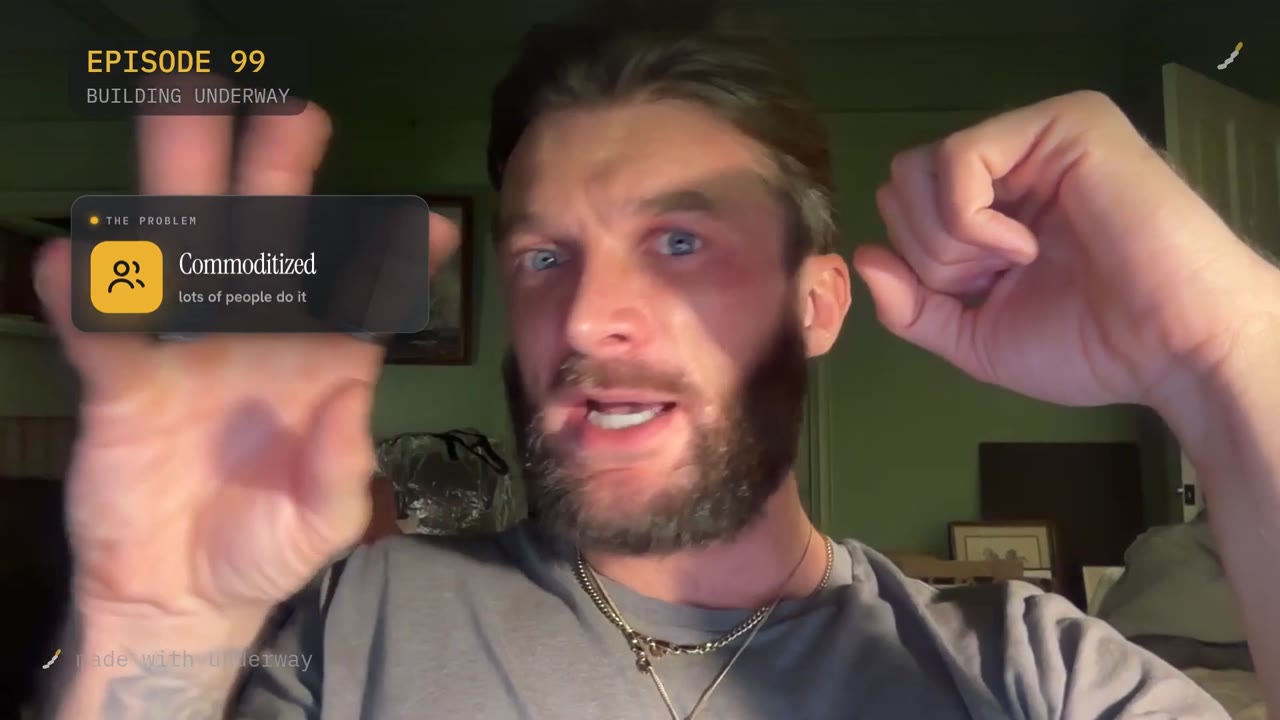
When I looked at what Underway is and the essence of it, yes, it helps you, it clips your videos together and puts a thumbnail on it. That's commoditised, lots of people do it. But the unique aspect of it is the whole it knows you. You need to document, and I've made that easy. That's what it is.
The ad that was performing well wasn't saying that. It was leaning on the commoditised bit, the clipping and the editing, because that's an easier, cheaper message to sell at the top of funnel. It just doesn't convert into a paying customer, because the person clicking it isn't the person who needed the thing Underway actually does.
How to check your own funnel for this
Write your ad's promise, your landing page's promise and your product's actual first-use experience as three separate one-line sentences. Read them one after another. If a stranger reading only those three lines would describe three slightly different products, that's the gap.
Look at what's converting best right now and ask, honestly, whether it's converting because it's true or because it's easy to click. An ad that performs well on cost-per-lead can still be the wrong ad if the thing it's promising isn't the thing that makes people stay.
Separate the commoditised part of what you do from the part that's actually yours. For Underway that's the difference between clipping and thumbnails, which plenty of tools do, and knowing you from what you've connected, which is the part nobody else has. Lead with the second thing, even if it's a harder sell in three seconds.

What it costs you, and who this is for
This costs you real money before it costs you time. I was already running quite a few ads, paying for signups, before I noticed the ad converting best didn't describe the product. That's money spent on the wrong message, not a wasted afternoon.
This matters most if you're the one doing the work yourself rather than handing it to a marketer, because you don't get the benefit of someone else's distance from the product. You built it, so you already know what it does; the hard part is noticing when your own ad has drifted from that, because you're too close to see it drift.
It doesn't matter if your numbers are small. The lesson is the same whether you're running one ad or fifteen: a cheap, well-converting ad that misdescribes the product is worse than an expensive one that describes it correctly, because the first one spends your money buying people who were never going to stay.
Questions people ask
What does top of funnel mean for a Facebook ad?
It means you only get a small chance, a few seconds, to land a message with someone who knows nothing about you. Because that window is so short, the message tends to simplify toward whatever's easiest to click, which can drift from what the product actually does.
How do you know if it's your messaging rather than your targeting?
If people sign up at a reasonable cost but don't convert, don't turn up, or put in a fake card, that's usually a messaging problem, not a targeting one. Targeting problems look like nobody clicking; messaging problems look like plenty of people clicking and then disappearing.
What's the difference between a commoditised feature and what actually makes a product different?
A commoditised feature is something lots of other tools already do well, like clipping a video or adding a thumbnail. What makes a product different is usually something closer to how it works for you specifically, which is harder to say in an ad but is the reason people stay.
Should you fix this yourself or hire a marketer?
Doing it yourself means you learn the lesson directly, which is harder but sticks. A marketer can help, but if you built the product, you're often the only one who truly knows where the ad's promise and the product's reality have come apart.
What do you do if an ad is converting well but still doesn't match the product?
Don't let the conversion rate excuse the mismatch. A converting ad that misdescribes the product will keep bringing in people who were never the right fit.
Is a mismatched ad a marketing problem or a sales problem?
It looks like a sales problem when leads don't turn up or don't pay, but it's usually a marketing one. The fix is going back to the ad and landing page, not training the sales process harder.