
Article
day in the life of a startup founder, filmed without a crew
4 October 2026 · 10 min read
Post on Xthe short answer
a day in the life of a startup founder is rarely the 4:30am alarm and the cold plunge. it is a bug that has eaten three days, a fix that finally holds, a call that runs over, and a dozen small decisions nobody else sees. the interesting part is never the routine. it is what was at stake today and whether it resolved.
that is also why most day in the life videos made by founders are forgettable. they film the coffee, the laptop and the walk, set it to music, and leave out the one thing a viewer would have stayed for: the founder saying, in their own words, what went wrong and what they did about it.
the film above is a dramatisation of the other way to do it. the founder in it is generated, not a customer. the product, the questions and the cut are how underway works: it keeps track of the day as it happens, asks for a few minutes when you are free, interviews you on camera about one thread from that day, and cuts the episode in the order you said it.
what a day in the life of a startup founder actually looks like
read the pages that rank for this and you get two kinds of answer. one is the schedule: wake early, emails, stand-up, product, investor call, gym, more emails. the other is the confession: no off button, skipped meals, the line between work and life gone. both are true for somebody. neither tells you much, because a founder's day is defined less by its timetable than by what broke in it.
strip the routine away and most founder days are made of the same few ingredients, in different amounts:
- building. code, design, the shop fit, the menu, whatever the product is made of. long stretches where nothing looks like it is happening.
- a problem that will not go away. the bug that only hits one kind of card, the supplier who has gone quiet, the conversion rate that dropped on tuesday.
- people. customers, a co-founder, a hire, an investor, a call that was meant to be thirty minutes.
- money. what came in, what is going out, how long the runway is now.
- a decision. usually small, sometimes not. ship it or hold it, raise the price or not, say yes or say no.
- the walk. the shower thought, the half hour away from the screen where the fix actually arrives.
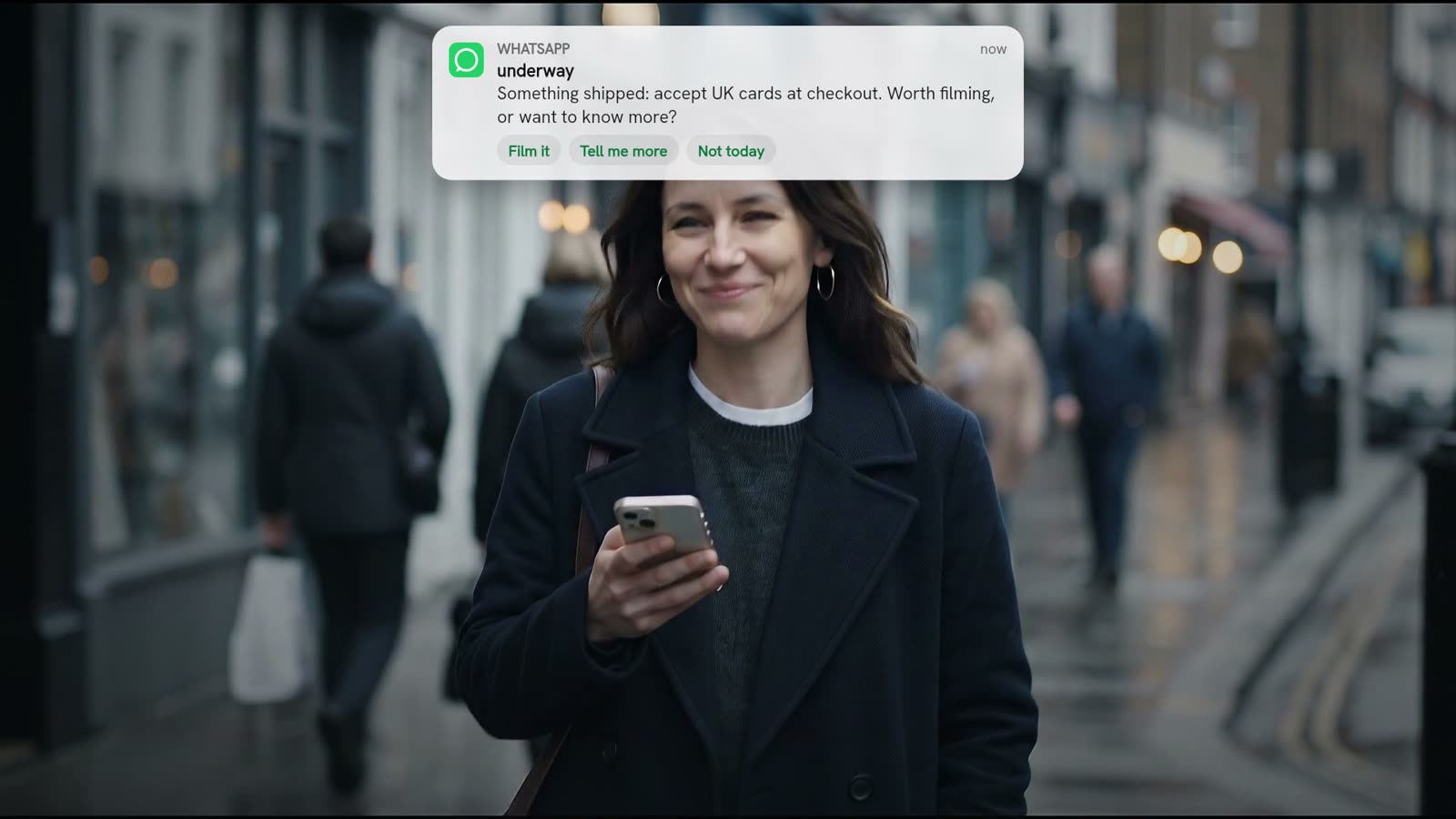
the film's founder has exactly that kind of day: a payments app, a bug where cards from one country fail at checkout, three days of it, a fix, a walk, an investor call that runs long. nothing in it would make a highlight reel. all of it is a story, because something was at stake and it moved.
why most founder day in the life videos are the same video
the guides for filming a day in the life video are written for lifestyle creators, and they are good at what they do: natural light, short clips of five to ten seconds, wide and close angles, a voiceover, a track underneath, snappy cuts. follow them and you get a pleasant montage of somebody's morning.
for a founder, that advice runs into three problems.
- the important part is invisible. a bug fix is a person looking at a screen. an investor call is a person looking at a different screen. b-roll shows that you were busy, never what was at stake.
- filming the whole day is a second job. remembering to shoot clips while you work means the clips win or the work wins, and on the days that matter most the work wins.
- the edit is where it dies. a montage cut by hand is an hour or more in an editor, for one video. once a week is hard. every day is a part-time job.
so founders make one, it takes a weekend, it does fine, and there is never a second. one day in the life video is a curiosity. sixty of them, numbered, is a series people follow to find out what happens next.
what makes a founder's day worth watching
the founder videos that hold attention tend to share a shape, and it is not the routine. it is closer to how a good interview works:
- one thread, not the whole day. a packed day crammed into three minutes is a list. one problem followed from the start to where it stands now is a story.
- the founder's own words, said on the day. not a script and not a recap written a month later with the ending known. the frustration should still be in the voice.
- an opening that names its subject. "the checkout bug that only hit uk cards is fixed" works for someone arriving cold. "so that thing finally worked" does not.
- the order it happened in. what broke, what you tried, what fixed it, what it changes. reshuffled for a punchier opening, it starts to feel produced.
- a number on the front. episode 47 tells a viewer there were 46 before it and there will be a 48. that is the reason to follow, rather than to watch once.
none of that needs b-roll, music or a crew. it needs someone to ask the right questions about the right part of the day, and something to cut the answers without moving them around.
how to film a day in the life of a startup founder by hand
you can do all of it yourself. it is worth knowing the manual version, because it shows where the time goes.
- keep a running note through the day: what broke, what shipped, who you spoke to, what changed. half sentences are fine.
- when you are free, read the note and pick one thread. the one with the most at stake, or the one that resolved.
- write three or four questions about it, in order: where it stood this morning, what you tried, what happened, what it changes next.
- prop the phone up, read a question, answer to camera, stop. repeat. retake an answer if it came out as a pitch.
- cut the answers together in the order you gave them, take out the false starts and the ums, add captions, put the episode number on the front.
- write the post that goes with it for each place it is going, and post it.
steps one, two and four are the valuable ones, and they take a few minutes. three, five and six are where an hour goes, and they are the steps that end the habit. that split is the whole design of underway: you do the remembering and the answering, it does the rest.
the film, step by step, and what is real
the film compresses a day into 48 seconds, so here is what each part corresponds to in the app as it is built today.
it notices the day. the commits, the voice note and the calendar in the film are the tray: everything the day turned up, in one place. connect a repository and your commits land under shipped. connect a calendar and who you met, and when, lands under calendar. a freestyle, a spoken thought recorded on a walk, is transcribed and kept as context. a moment, fifteen seconds to camera when something just happened, is kept too. what you capture yourself arrives ticked; from what the app collects, the director ticks the lines that matter to your season and says why, and your own tick or untick always wins.
it asks at the exhale, not mid-flow. in the film the fix lands and a message arrives: something shipped, worth filming? that is the app today. connect slack or whatsapp and, once your commits have gone quiet for twenty minutes, it sends that line with three buttons, film it, tell me more, not today. an email, a payment or a meeting that ended can prompt the same way, a milestone shows as a noticed card on today with a button to record a moment about it, and the daily reminder arrives at the time you picked. dismissing any of it costs nothing: no streak damage, no second ask.
it offers threads from the day. on the setup screen, threads from today are read from everything the tray collected since your last episode, and you tap the ones you want, or type your own. the questions are written around what you picked, one each, plus one to land what happens next. you can read them, change any, and add notes before the camera goes on.
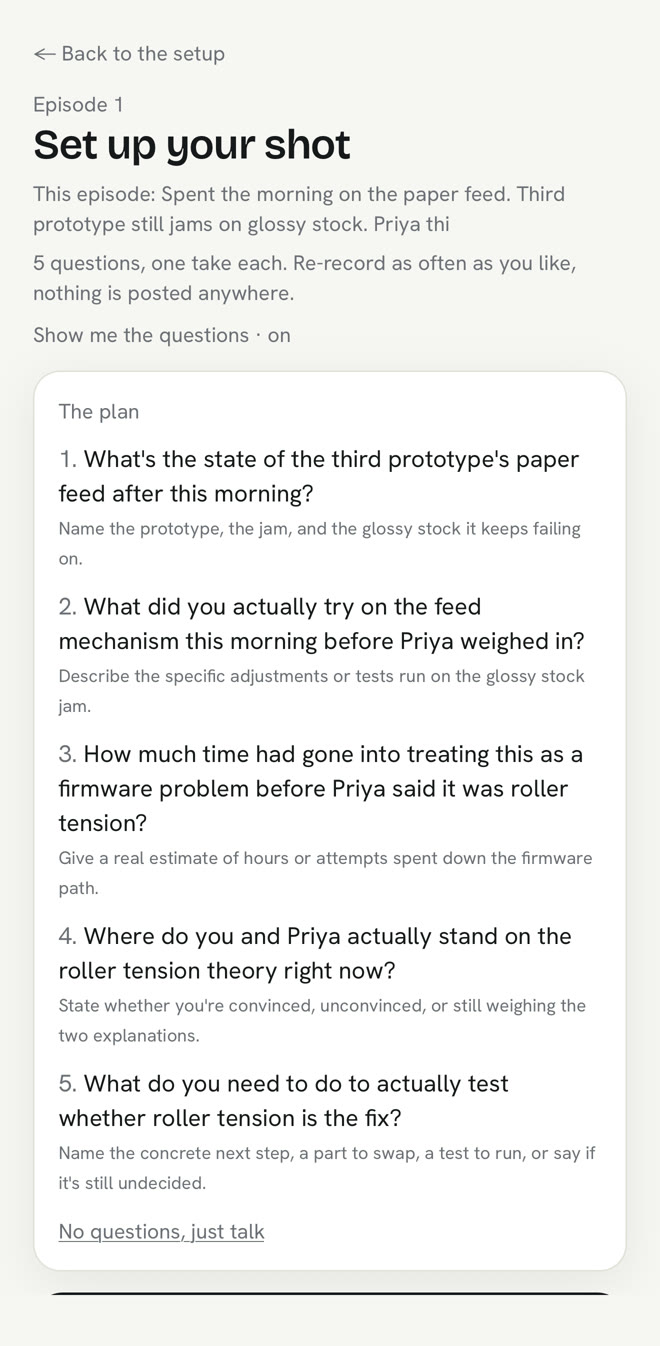
it interviews you out loud. each question is spoken in the voice you chose for the series and stays on screen too. you answer, stop, and the director decides what comes next: a follow-up on the thing you skated past, the next beat, or the end. on a standard episode about three minutes of answers is the target and five the ceiling, enforced in code, so a busy day still ends on time. if the day is not having it, not now gives you one question and thirty seconds, and it still counts.
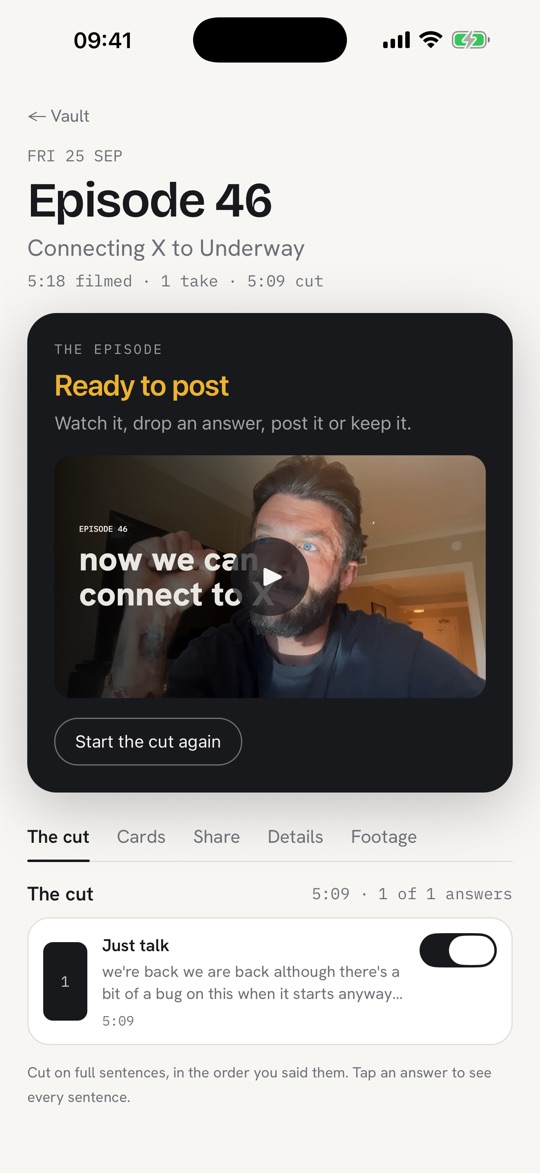
it cuts the episode in the order you said it. the answers are cut on full sentences, filler and false starts removed, captions on, the episode number on the card at the front. nothing is reordered for a hook, no words are added, and nothing is generated. the finished episode is ready minutes after you finish, with the words for each platform written from what you said.
a day in the life vlog or a daily episode: which one to make
they are different formats, and both are legitimate. here is the honest comparison.
| the format | day in the life vlog | interview-led daily episode | |
|---|---|---|---|
| what it shows | the routine: places, screens, coffee | one thing that was at stake and how it went | |
| what you film | clips all day, while working | a few minutes of answers, when you are free | |
| who decides the story | you, in the edit, afterwards | you, by picking a thread before the questions | |
| editing | an hour or more by hand | none by you; cut in the order you said it | |
| sound | voiceover and music | your voice, the questions asked out loud | |
| how often it is realistic | occasionally | whenever suits you, as often as you choose | |
| what accumulates | a few one-off videos | a numbered series, in order, dated |
if you love editing and want a polished lifestyle piece once a quarter, a classic vlog with a tool like capcut or descript is the right buy, and underway is not. if what you want is a record of the build that keeps going, the interview is the part that makes it sustainable.
what it costs
three episodes are free, with no card. founder is $29 a month or $290 a year: the daily interview that already knows what you did, a numbered episode minutes after you finish, your page and the words for every platform. series is $79 a month or $790 a year and adds the week in one cut, compilations, the podcast feed and one tap to every connected network. raw footage is downloadable on every plan, free included, because it is your face and your voice.
what does a day in the life of a startup founder actually look like?
less like a schedule than the published versions suggest. most days mix building, a problem that will not go away, people, money and a decision or two, in different amounts. what makes a day worth telling is not the routine but what was at stake and whether it moved.
how do i film a day in the life video as a founder without editing?
skip the all-day b-roll. keep a note of the day, pick one thread, answer a few questions about it to camera, and keep the answers in the order you gave them. underway does the questions, the cut, the captions and the episode number for you; you do the answering.
is the founder in the underway film a real customer?
no. it is a dramatisation and the founder is generated. the product, the questions and the cut shown in it are how underway works, and everything the film shows happening, from the shipped nudge to the cut, is in the app today.
how long should a founder day in the life video be?
as long as the story needs, which for one thread is usually one to three minutes. underway's standard interview aims for about three minutes of answers and stops at five, and the cut never trims real content to hit a length.
do i have to film at a particular time of day?
no. an episode is filmed whenever suits you: after a meeting, at lunch, late, or more than once in a day. the daily reminder arrives at the time you pick, and on a day the camera is not happening, a podcast with no camera keeps the series going.
where to go next
the daily version of this, with the case for numbering episodes rather than days. a startup vlog nobody has to edit.
the questions worth answering about a working day, and why the first one matters most. questions to answer on camera about your business.
for the days when the honest answer is that nothing much happened. what to post when nothing happened today.