
New in underway
turn long video into shorts that open on your best line
3 October 2026 · 8 min read
Post on X
to turn long video into shorts, you need three things: the moments that make sense without the rest of the video, a vertical frame with captions people can read with the sound off, and an opening that works in the first second. underway does all three for every finished episode: it cuts vertical clips for youtube shorts, instagram reels and tiktok, each opening on the line most likely to stop a scroll, each ending on a card that says where the full episode is.
page one for this search is clip tools. veed, capcut, flexclip and others take a long video you upload and hand back a set of shorts, and opus clip does the same job. if you have a podcast, a webinar or a stream already recorded, they are the right place to start. this page explains how the job is done, by hand or by a tool, what makes a short worth cutting, and what underway does differently because the long video is an episode it filmed with you.
how to turn long video into shorts, step by step
whatever you use, an editor, a clip tool or underway, the job is the same seven steps.
- find the moments that stand alone. a short has no context. a line that leans on something said three minutes earlier dies in the feed. look for a claim, a decision, a mistake, a surprise, a moment where something was at stake.
- cut each one to well under a minute. long enough to land one point, short enough to watch twice.
- open on the strongest line. the first second decides whether anyone stays, and the strongest line does not have to be the first thing you said in that stretch.
- reframe to 9:16, with the face in the frame. a face is what stops a thumb.
- add captions. plenty of people watch with the sound off, so the words have to be on screen, big enough to read on a phone and below the face rather than across it.
- end by pointing at the full video. a short is an advert for the long one, so say where it is.
- write the words for each network: a title for youtube, a caption for instagram and tiktok, a post for linkedin and x.
by hand, in an editor, that is a long afternoon for one long video: watching all of it, marking moments, trimming, reframing, captioning, exporting each one. that afternoon is what the tools on page one sell you back.
what makes a short worth cutting
a loud moment is not always a good short. a moment that makes sense on its own usually is. before you post any clip, put it through five questions.
- does the first sentence name its subject, or does it start with it, that or this?
- would a stranger know what is at stake within three seconds?
- is it said cleanly, or full of restarts and ums?
- can you see the face in the first frame, or is it dark, turned away or covered?
- does it end on something, rather than trailing off mid-thought?
the first question catches the most common failure. the line was great in context, and the context is exactly what a short does not have. the second catches the clip that is interesting only to you. the fifth catches the clip that was cut where the time ran out rather than where the thought did.
turn long video into shorts with underway
on series, every finished episode makes its clips on its own, on the episode's shorts tab, on the web and the phone. on founder, find clips makes up to two. there is nothing to upload: the long video is the episode underway already cut. find clips again makes a fresh set whenever you want one.
how many depends on the length: about one for every three minutes of episode, up to five. a short episode gives one, an eleven-minute one three or four. they are ranked, the one most likely to do well first, and the best is marked.
- each clip runs between about twelve and fifty seconds.
- it opens on a line from anywhere in the episode, chosen the way an editor would choose it: several of your own lines are weighed against the first three seconds, how much life you said them with, and whether they make sense with no context.
- a line where the picture is too dark to see your face never opens a clip.
- then it plays an unbroken run of what you said, in the order you said it.
- pauses, ums, restarts and words said twice come out, even across a join, and stretches you said cleanly are chosen over ones where you tripped.
- captions are lit word by word, low in the frame below your face, two lines at most, and the opening line sits big on screen for the first seconds.
- a gentle zoom only where a new thought starts, at most once every seven seconds.
- a quiet music bed under your voice, dipping whenever you speak. music under clips is a switch, and it is on unless you turn it off.
- a last card says where the full episode is.
before anything is made, stills of each clip's first seconds and every cut are looked at again with the plan, and the plan is changed once if something is wrong.
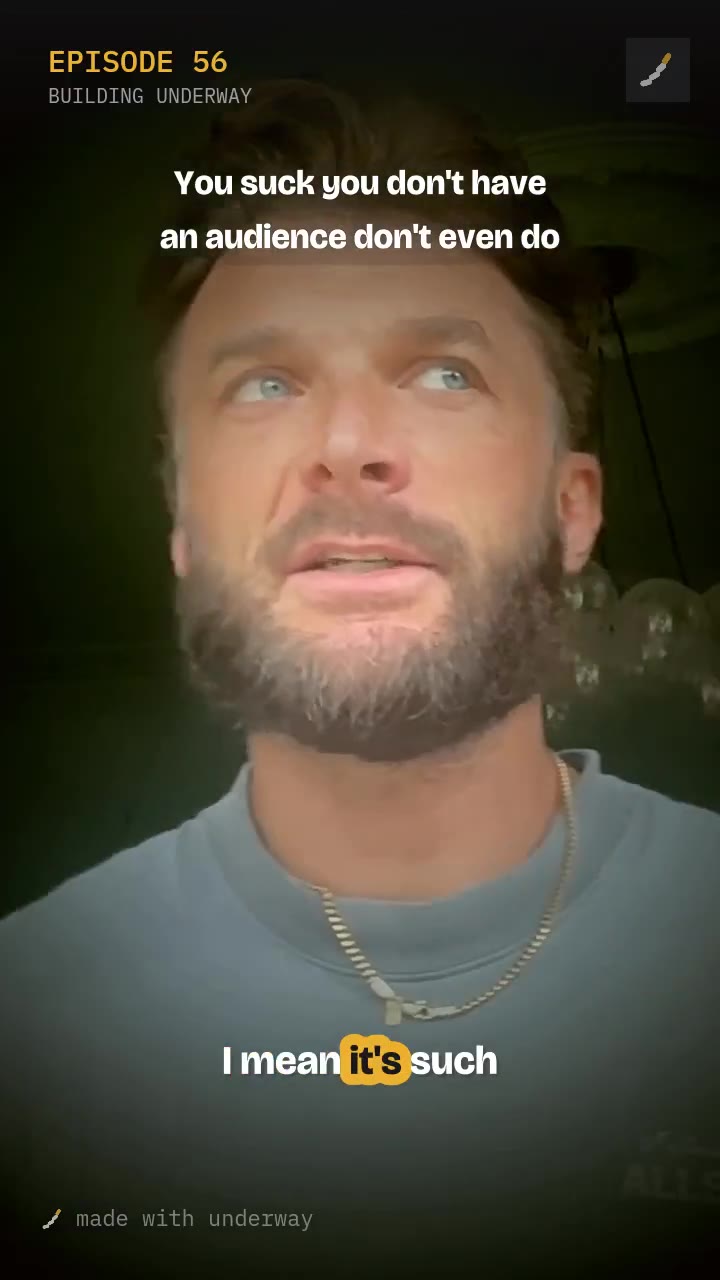
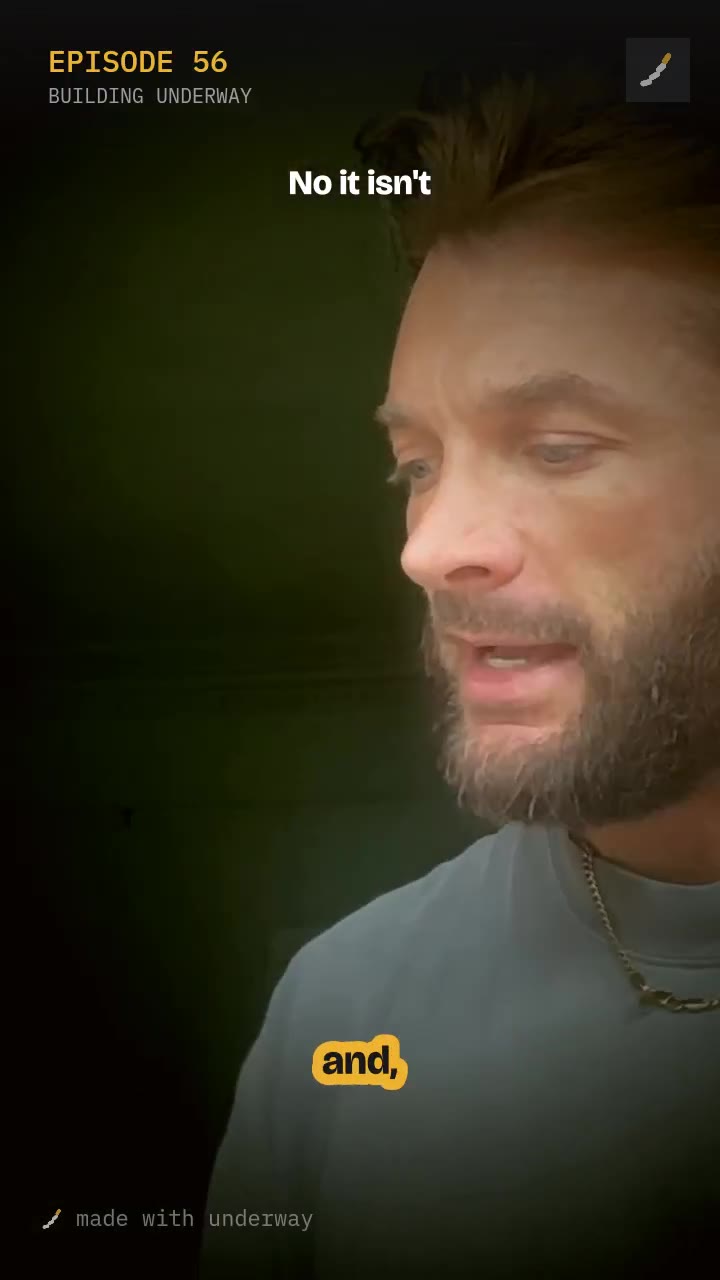
your words only, and the episode is never touched
a clip is an advert for the episode, so it may open on any line. the episode itself does not change: it stays in the order it was filmed. a line you struck from the episode never comes back in a clip. the words on screen are copied from what you said. there is no stock footage and nothing generated in the picture.
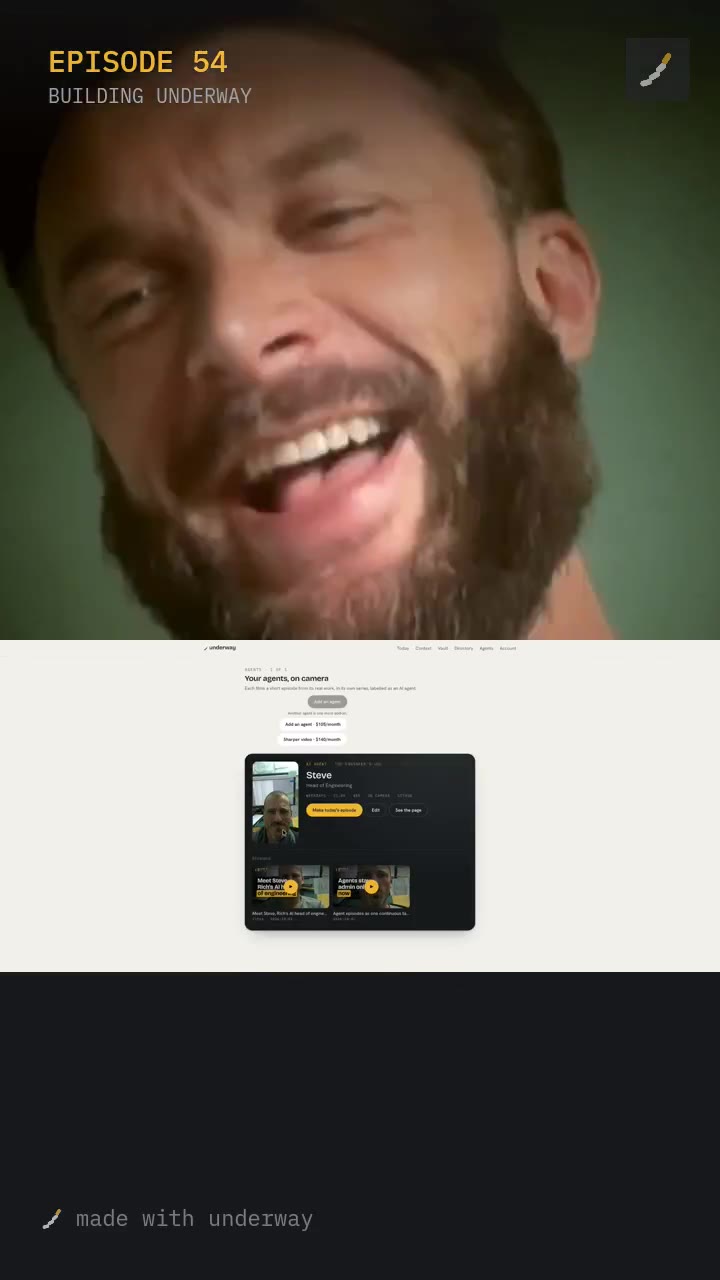
where you shared your screen and the clip's own words point at it, you fill the top half and the screen sits below, so the clip shows what you are talking about. where the screen was up but you were not talking about it, the clip leaves it out and stays on you.
a podcast episode makes clips too. its clip is the podcast's card with the clip's line as the headline, bars moving to the voices and both voices captioned. a guest interview's clip stacks you above your guest, from the two recordings themselves, and your guest's best answer is often the clip, and the one they will share.
posting the shorts
open a clip and the words for each network are written for you the first time: youtube, instagram, linkedin, x and tiktok, each in its own box, in your first person, from what you say in that clip and nothing else, with no links and no link in bio. change any of it. under each box is the button for that place, and each asks once more before anything goes, then posts exactly what is in the box. download the clip saves the file for anywhere else.
every clip has its own cover, made from its own words: on the studio plan a pro thumbnail with you in it, otherwise its opening frame in your vault cover's design. instagram takes it as the reel's cover. youtube, linkedin and x take no cover from an app, so the clip is sent with its cover held for its first second.
on youtube, set the full episode as the short's related video in youtube studio. it is the link under the short, and the best way to turn someone who watched the clip into someone who watches the whole thing. once your series is public, put your page's address in your bio on each network: every clip's last card names it, and none of these networks lets anyone tap a link in the post itself.
| upload-anything clip tools | underway's shorts | |
|---|---|---|
| what you start with | a file or a link you already have | the episode underway filmed and cut with you |
| best for | podcasts, webinars and streams recorded anywhere | a series you document with underway |
| what happens to the long video | nothing, it stays wherever it was | it stays your episode, unchanged, in the order it was filmed |
| lines you cut from the long video | the tool has no way of knowing | never come back in a clip |
| where the clip sends people | wherever you point it | a last card naming where the full episode is |
when to use a clip tool instead
if your long video was not made in underway, a webinar, a livestream, a podcast recorded somewhere else, use a clip tool. underway's clips are cut from its own episodes, and that is the point rather than a limit: it already knows every word, every pause and every line you struck, because it filmed and cut the episode with you. that is how it can promise a clip never puts back a line you took out.
faqs
how do i turn a long video into shorts?
find the moments that stand alone, cut each to well under a minute, open on the strongest line, reframe to vertical, add captions and end by pointing at the full video. underway does this for each finished episode on its own.
how many shorts does one long video give?
in underway, about one for every three minutes of episode, up to five. a short episode gives one.
does making clips change my episode?
no. the episode stays exactly as it is. clips are separate files made from it.
how long is each short?
between about twelve and fifty seconds.
can i make shorts from a video i didn't film in underway?
no. clips are cut from underway episodes. for other videos, a clip tool such as opus clip, veed or capcut is the better fit.
does it work on podcasts and guest interviews?
yes. a podcast's clip is its card with the line as the headline and both voices captioned; a guest interview's clip stacks you and your guest.
the same job for an audio episode: how to make shorts from a podcast.
the still people see in the grid: youtube shorts cover.
From the series
Founders’ episodes, written up.
Every public episode on underway has a page of its own: the video, then the same account in writing, checked against what the founder actually said.
Browse every series
Building Underway
People pay more than you think to fix a problem
I changed the positioning of Underway from day-one urgency to the pain of not having posted content for years, and raised the cheapest plan from a 14-day trial at $29.99 to a seven-day trial at $129.99. Signups came in faster and the cost to acquire each one dropped a lot. That lets me start working out CAC, margins and recurring revenue, which matters after the Anthropic bill gave me a scare. I'll go through the ads I crafted in another episode.
Building Underway
Train Your Ai Clone To Make Money: part 2
I rebuilt my AI clone in Underway from three short phone recordings, then used it to set up a 12 to 15 second ad. I played back the clone video from last time, which I'd be happy to run as an ad even though the pacing at the end is off, and showed earlier attempts where the face and lighting were wrong. The model finished building while I talked through how the ads get researched and written, and the new ad I queued was still at 0% when I stopped.
Building Underway
Train Your AI Clone to Make Money
I trained my AI clone inside Underway for marketing by recording the three short clips it asks for: sat and talking, up close, and walking with my phone. I turned the voice recording off because Underway already has plenty of my voice from the episodes I've made, so it defaults to that. The walking clip was still saving when I stopped, so how the clone actually looks and how I use it to write scripts and market will be part two.

Building Underway
Meta ads setup for more app sign ups
Underway hit 20 signups, and I'm testing an AI background changer for a new studio setup. I talk about how the signups feel compared to my first big sales back when I started in sales, and why I'm documenting it to see where I am in a year's time. I'm also recording this one sitting in front of a plain wall in my kitchen that gets filled in with a background, after seeing a few people on X post videos doing the same. I don't know yet how it will come out.
Building Underway
How to screen record only one tab (for SEO traffic)
I walked through Underway's "what's worth doing now" section on the Today page, which scans my website and GitHub and suggested filming "how to screen record only one tab" to sit alongside the article I already have up, with a one-click handoff into filming the walkthrough. I also mention we got our first customer yesterday after switching the ads from join for free to entering card details with 14 days free. The hover highlight on that screen isn't working, so the black panels are hard to read, and I'm going to fix that next.
Building Underway
Getting found in AI search terms
I walked through Underway's Found in AI Answers tool, which checks the questions buyers ask ChatGPT, Claude and Gemini with web search on and reports whether the answers name you, cite your page or name a competitor instead. This week I'm named in 1 of 17 answers, cited by ChatGPT for a question about a tool that interviews you by voice and turns the answers into a podcast episode. Nine of the searches name someone else, and for each one the tool gives me a question to say out loud and answer on camera, then publishes the answer on my own site under that heading. I haven't filmed those answers yet.