
Article
build in public as an introvert: be asked, don't present
30 September 2026 · 9 min read
Post on Xbuild in public as an introvert: the short version
to build in public as an introvert, stop presenting and start being asked. presenting to camera makes you generate the topic, the structure, the opening line and the energy yourself, alone, to a lens. an interview asks you one question about something that happened today and waits for the answer. most introverts are uncomfortable at the first and perfectly fine at the second, because it is how they talk anyway.
the rest follows from that. never record an intro to camera. have the questions asked out loud so you are answering a voice, not reading a card. use voice-only days as a ramp while the habit forms. hand the edit to something else so you are not watching yourself for an hour. and keep your own voice in, even on the days your face stays out.
why building in public as an introvert feels so hard
most of what comes up for this search is public-speaking advice: breathe, practise, stand like you mean it. that is good advice for a keynote. daily build in public is not a keynote. it is small, frequent and unrehearsed, and the strain comes from different places:
- the blank lens. a camera asks nothing, so you have to decide what to say before you can say it, which is the part introverts find most draining.
- the intro. "hey everyone, welcome back" is a performance, and it is the exact moment you start sounding like someone else.
- the retakes. filming the same thirty seconds three times because the first sounded stiff.
- watching yourself back. editing means an hour looking at your own face, which is the worst part for many people and optional for none.
- the energy. talking-head video rewards high energy, and forcing it is tiring and shows.
the other common answer is to go faceless: stock footage, text on screen, a synthetic voice. that works for some channels. for building in public it removes the thing that makes it worth watching, which we come back to below.
how to build in public as an introvert: be interviewed, don't present
nobody performs in a conversation the way they perform to a lens. when someone asks you a real question, you answer it. your attention is on the question, not on how you look, and the words come out in your normal voice at your normal pace. that is the whole trick, and it is why podcasts are full of people who would never make a solo video.
underway is built on it. it reads what you connect (your calendar, GitHub, your meeting recorder, all read-only) and anything you add, and writes questions about the day you actually had. it asks them out loud, one at a time, in a voice you choose once for the series. the question stays on screen as well, and asking out loud can be turned off if you find it worse. after each answer it decides whether to follow up, move on or stop, and it only digs when you named something specific and left it unexplained. it never praises you to seem attentive.
if you like to prepare, you can. the questions can be written before you start, so you can read every one, change any of them and add notes before the camera goes on. or switch to One at a time, which feels more like being asked. either way there is a clock: a standard episode aims for about three minutes of answers and stops at five. short enough that it never becomes an ordeal.
| presenting to camera | being interviewed | voice only | |
|---|---|---|---|
| what you decide first | topic, structure, opening line | which thread, from a few suggestions | which thread, or just chat |
| the first thing you say | an intro you wrote | an answer to a question | an answer to a question |
| where your attention goes | the lens and how you look | the question | the question; no face at all |
| the edit | you, watching yourself | done for you | done for you |
| on a low-energy day | usually skipped | a short one, about a minute | doable from a car or a walk |
no intro to camera, ever
the daily intro is where people start performing, and it is one more thing to do. so underway never asks for one. the episode opens on a card with your series name and episode number, and then your first real answer.
that answer still has to make sense to someone arriving cold, which is solved upstream by the question. "how did today start?" gets a shrug and a pronoun. "what's the state of the signup emails today?" gets an answer that names its subject, which is a perfectly good opening. the cut also prefers a sentence that stands on its own over one that starts mid-thought. you never have to introduce yourself, and you never have to say "welcome back".
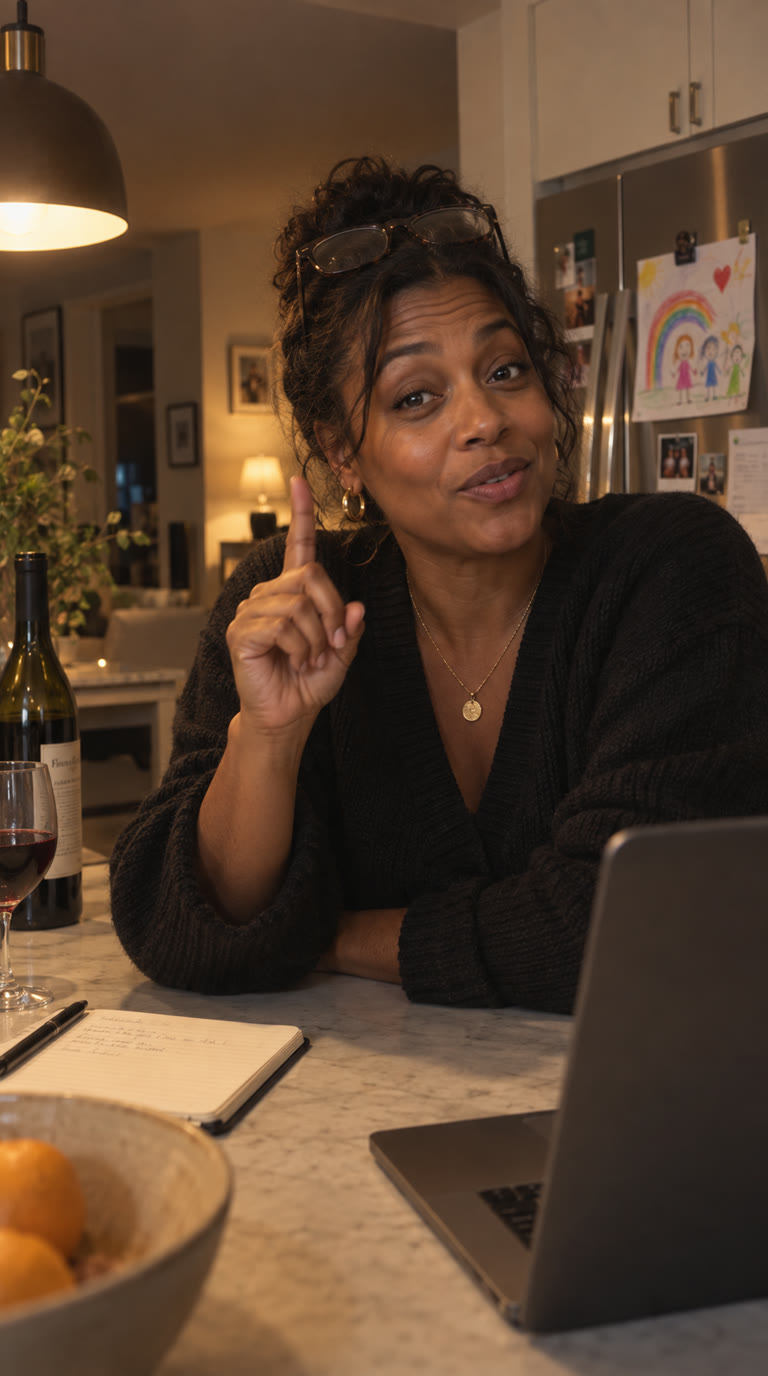
camera shy founder? start with your voice
if the camera is the whole problem, leave it off for now. on the setup screen pick Audio instead of Video, and the interview runs on the microphone alone: the host asks, waits while you talk, says "right" or "mm-hm" when you stop, and asks the next thing. the episode is a podcast with the questions kept in, so it sounds like a conversation rather than a voice note. it is numbered like every other episode and counts for your streak.
it still travels. a podcast episode is also drawn as a video: your episode card with the waveform moving to both voices and the captions along the bottom, so it can go to YouTube, LinkedIn, TikTok, Instagram and X like any other episode. and on paid plans there is a live co-host for podcast days: a conversation with an AI host that listens and follows you, both voices in the recording.
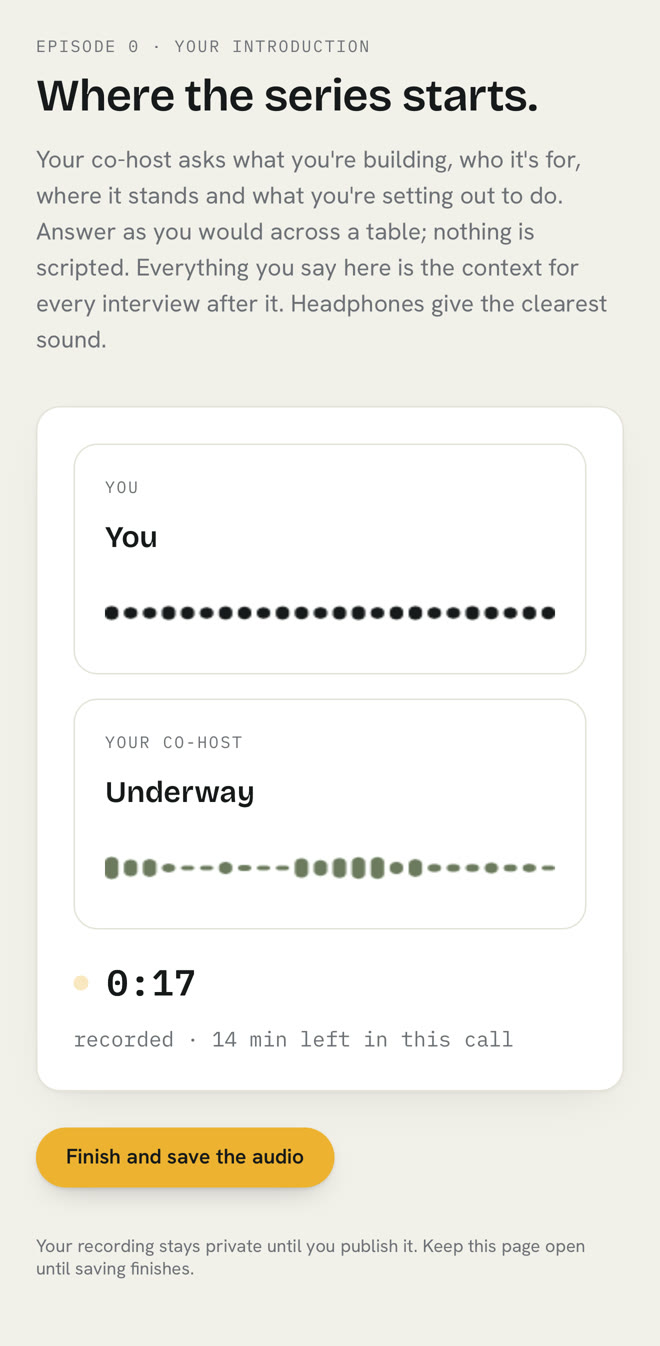
your very first episode works this way too. episode zero, where you say what you are building, who it is for and where it honestly stands, is a conversation with a co-host rather than a piece to camera, up to fifteen minutes, on every plan and before any co-host time is bought.
treat voice as a ramp, not a hiding place. start voice-only while the habit forms, then try a short video once showing up is normal. the face is the strongest thing a series has, and an audience that has heard you for a month tends to be kind about finally seeing you.
introvert founder video content without the editing
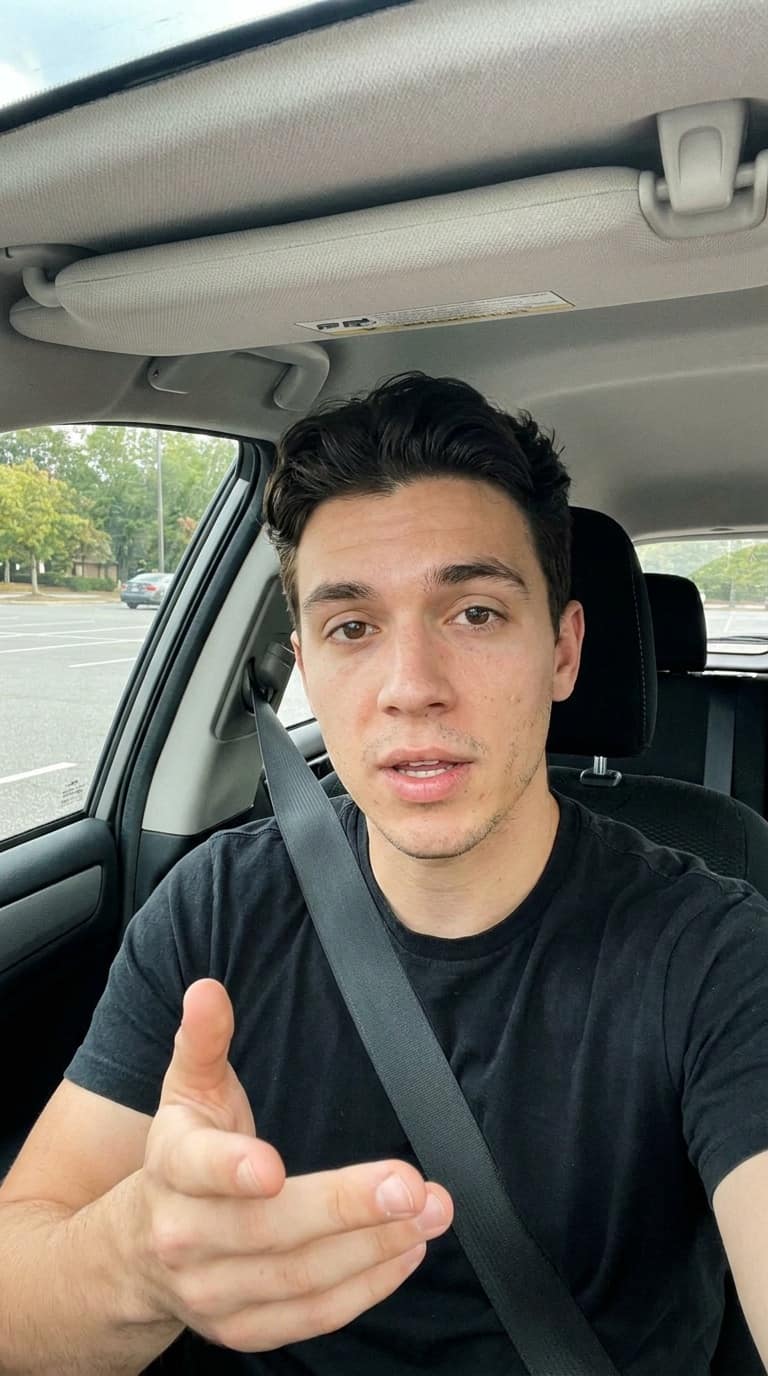
for a lot of camera shy founders the worst hour is not filming, it is editing: scrubbing through your own face, hearing your own voice, deciding which take is least bad. that hour can go.
underway cuts your answers together in the order you said them, removes filler, false starts and long pauses, opens on your episode card and burns in captions. transitions, audio clean-up and your look are set once and applied to every episode, so there is nothing to decide per episode. face smoothing exists as a slider, off by default; keep it low, because the archive only works if you still look like you in episode 200. you can watch the result once, drop a line you regret, or not watch it at all.
if you got a fact wrong, retake that answer and the new one replaces the old. if you just said it imperfectly, leave it. slightly awkward and true reads better than polished and rehearsed, and nobody comes back for the delivery. they come back to find out what happened next.
if you already use Descript or Loom and like them, they are good tools, and Descript's text-based editing in particular is excellent. the difference is where you start. those begin from footage you already recorded. an interview begins from nothing, which is the part an introvert actually struggles with.
why the voice stays in
"go faceless" is the other advice this search turns up, and it usually means stock clips with a generated voice reading a script. anyone can make that. it tells the viewer nothing about who is building the thing, and building in public only works because the viewer believes a real person is doing it.
your voice is the proof that is left when the face comes off. it is how people hear your doubt, your relief, the pause before a hard answer. so underway lets the camera go whenever you like, and never the voice. every answer in every episode is you, spoken on the day, in the order you said it. no words are added and nothing is read out for you.
a gentle first week for a camera shy founder
- record episode zero as a conversation. voice only, no script, as long as it needs up to fifteen minutes.
- for the next few, use Audio and the Short length, about a minute. one thread, the thing you worked on.
- when that feels ordinary, try Video, still Short, phone or laptop where it was yesterday. no lights to buy.
- keep everything private while you get used to it. every episode stays in the vault until you send it, and posting is a separate choice from recording.
- choose a commitment you would keep on a bad week: weekdays by default, or three a week. pause it with one press when you are away.
faqs
can i build in public as an introvert without showing my face?
yes. voice-only episodes are full episodes: numbered, cut, captioned and drawn as a video with a waveform so they can go wherever a video goes. what you should keep is your own voice, because that is what makes it believable.
do i need to be good on camera?
no. you need to answer a question about your day. the interview does the structure, the cut removes the stumbles, and a slightly awkward true answer beats a rehearsed one.
what if i freeze mid-answer?
pause. long silences and false starts are cut out. you can skip a question, retake an answer, or press Not now for a single thirty-second question instead.
can i see the questions before i start?
yes. they can be written before you start, so you can read them, change any and add notes before the camera goes on. or have them asked one at a time if you would rather not prepare.
is the interviewer's voice in the episode?
in a podcast episode, yes: the questions are kept in, because that is what makes it sound like a conversation. in a video episode the first question is set up by the title card, and each one after it is heard in the interviewer's voice over the first frame of your answer. the answers are all yours.
what does it cost to try?
three episodes are free, no card. Founder is £29 a month or £290 a year, Series £79 a month or £790 a year.
where to go next
a podcast episode with no camera at all: /podcast-no-camera.
what a founder video diary is, and how it runs: /founder-video-diary.
when you don't know what to say on camera: /dont-know-what-to-say-on-camera.