
How do you keep documenting your work when the day is difficult and there's a dog in the room?
by Richard Lovatt · updated 15 October 2026
You lower the bar for what counts as filmable. Underway reads your day from the tools you already work in, asks you about it out loud, and hands back a finished numbered episode minutes later, with no editing. So an episode survives a messy day, an interruption, or a dog climbing into frame: you talk once, in the room you're in, and the episode still exists.
In short
- The thing that kills a record of your work is not a bad day, it is the camera, the edit and the retakes.
- Underway reads your day first, so you are answering questions, not facing a blank camera.
- Interruptions are fine: there is no timeline to fix, nothing is reordered, and nothing is invented.
- Episodes stay private in the vault until you choose to share them, so a rough day can still be recorded.
- Small, real numbers are worth filming: two signups with card details on the 14-day trial is an episode.
The real problem: nearly not filming it
Do you know what I nearly missed? I think this is my first day in God knows how many days that I nearly missed doing an episode. That is the whole problem in one sentence. Not a lack of interest, not a lack of things happening. Just a day that filled up and a record that almost did not get made.
Everyone means to keep a record of building the thing. Almost nobody does. The camera, the edit and the retakes kill it in about a week, so the start is never filmed. And the start is the bit you cannot go back for. Imagine watching Steve Jobs build Apple. Nobody filmed it.
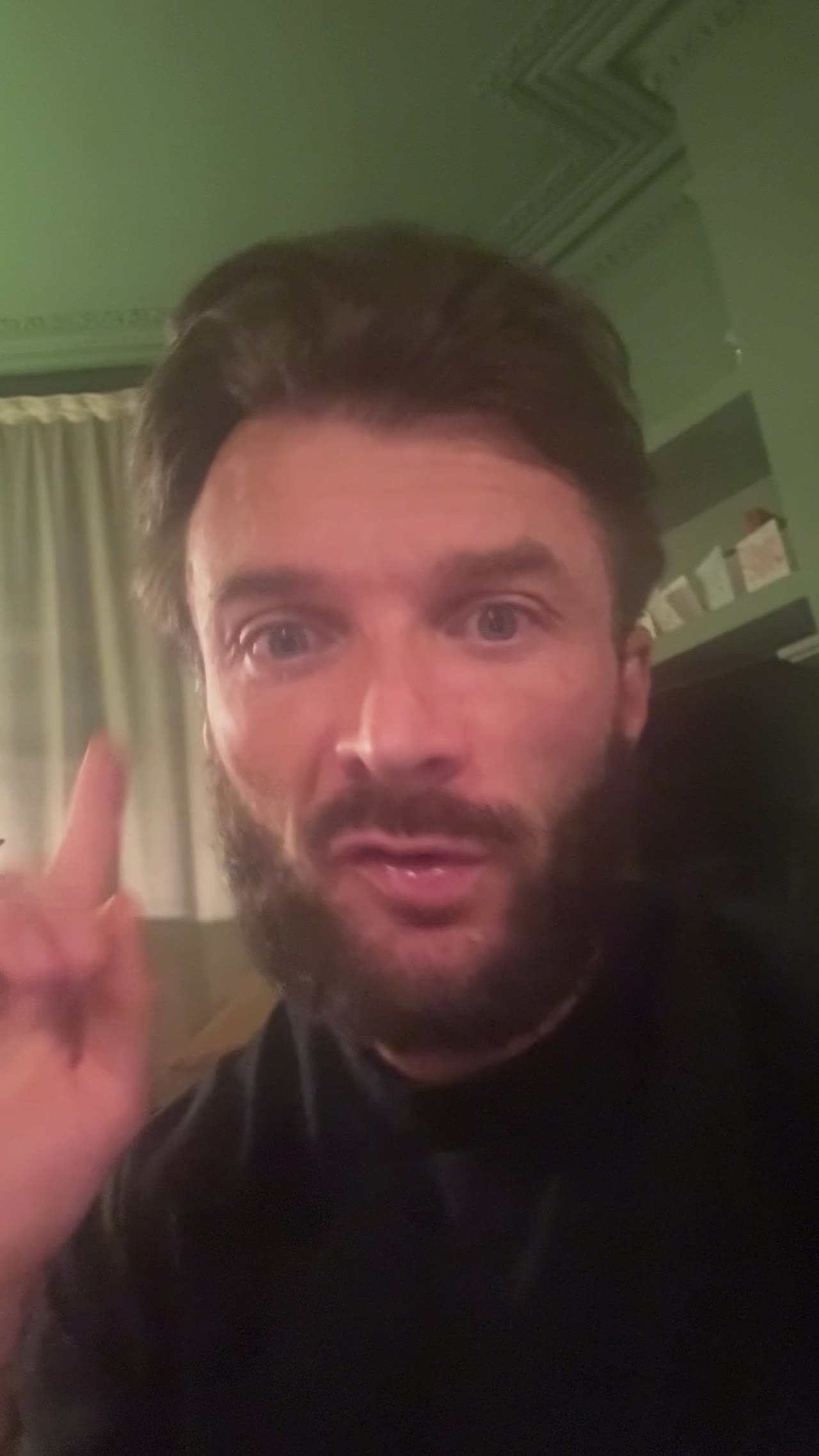
The second half of the problem is what the day actually looks like when you do sit down. It is not a studio. There is a dog in the room. Blue is a big baby, and halfway through the episode he is in frame and does not want to talk, because he's a bit too shy. If your format can only survive a quiet room and a tidy desk, your format will not survive your actual life.
What people try instead, and where each one falls down
Most people mean to film it and never start. That is the biggest category by a distance, and it is why the first year of almost every business exists only as a memory.
The written journal is the next step down. A notes app or something like Day One works and it is genuinely private, but it is writing, not your voice, and it never becomes anything anyone can watch. Occasional updates on X or LinkedIn are the opposite problem: they are public and they are text, and they stop when the week gets busy because each one is a fresh blank page.
Then there is recording clips and leaving them unedited on the phone. Everyone has that folder. Nothing in it is an episode. The last option is hiring or learning an editor and a studio setup: an editor like Descript gives you a timeline you still have to learn and use, and Riverside gives you a recording studio for produced interviews. Both are good tools, and both add exactly the work that makes people stop. Loom is one-off screen clips, not an ongoing show. Jellypod puts AI hosts over pasted text, which is not your voice about your own day.
How Underway handles a day that got away from you
I built Underway so that the day's record does not depend on having the energy to make something. It connects, read-only, to GitHub, your calendar, meetings, email, Google Drive, Slack, Shopify, Gumroad, Patreon, Figma and more. It reads what moved before it asks you anything.
That removes the blank page. You are not inventing a topic at the end of a long day, you are answering a voice that already knows the fix took all afternoon or the call overran. Thirty commits become the five things that actually moved, and you tick what the interview may use.
Then you talk once. There is no timeline, no retakes, no edit at all. Minutes later the episode is there, numbered like a show, video or audio, with captions written. The cut keeps what you said, in the order you said it. Nothing is reordered and nothing is invented, which is the only reason it works as a record rather than a highlight reel.
Everything stays in the vault, private, until you choose to share it. If a day is sensitive or just unimpressive, you still record it. You decide later whether it goes out, or whether the whole lot goes out at once, in order.
Filming through an interruption: the dog, the doorbell, the room you're in
The reason interruptions kill most attempts at documenting is that they create a decision. Do I start again? Do I cut that bit? Both answers cost time, and the second one costs skill you may not have.
With no edit, the decision disappears. When Blue climbed into shot and I asked him how old he was and said say hello, that is simply in the episode. It is accurate to the day. In a week it will be more interesting than the part where I recited the numbers.
If you do not want to be on camera at all, answer by voice and it is still a numbered episode. The point is the record, not the production. Off camera is fine here.
Practically: film where you are, with the light you have, talk as you would across a table, and press finish when you have said the thing. Stopping early is fine. What is saved is what was recorded.
What counts as an episode when the news is small
The other thing that makes people skip a day is thinking nothing worth filming happened. Almost always something did, it was just small.
The day in this episode is a good example. We got another sign up. It is a free trial, but these people put their card details in, so there are two signups now, both card-in on the 14-day trial. I feel much better about this than when we were doing free trials with no card, because these people have a bit more skin in the game and clearly believe in it more than before. Whether they pay is still open. You'll see what happens.
That is an honest episode: a small number, a reason it matters, and an unresolved question. It is also better material than a polished retrospective, because the outcome is not known yet. The same goes for the uncomfortable numbers. I am named in only 1 of 17 AI answers tested, and nine of those searches name a competitor instead. Saying that out loud is an episode too.
If you are stuck, the rule I use is simple: what changed today, and why did it matter to me? If a connected tool shows something moved, that is your answer waiting.
What it costs in time
The first episode takes about ten minutes, most of it talking. You type your first name and one line about what you are making, and the questions fit your world. Then there is episode zero: one spoken conversation with your AI co-host about what you are making, who it is for and where it stands. It has already read your line. Later questions build on that, so every series starts there.
After that, a daily episode is the length of your answers plus a few minutes of waiting. There is no edit to budget for, because there is no edit. That is the entire difference between a record that lasts and one that stops in week two.
Connecting a tool is quick. GitHub is Account, Connections, Connect GitHub, allow it to read, about twenty seconds. A local repository needs no account or key at all, just open the folder. Every connection works on every plan, free included.
Sustained, this adds up to a real archive. My own series is 63 episodes and counting, all made in the app, and every moment on the site comes from those episodes.
Who this suits, and who it does not
It suits solo founders building something now, particularly people who mean to build in public but stall at the blank camera, the edit and the retakes. It also suits anyone making anything: a shop, a studio, a band, an app. The wish is the same, to have filmed the start, and so is the fear of the camera.
It suits people who have already tried and stopped. If you have abandoned a vlog, a diary or a podcast, the thing that stopped you was almost certainly one of the nine reasons: the habit, the blank page, the edit, the risk, the silence, the script, the retakes and the rest. Each one is answered by removing work rather than adding discipline.
It does not suit you if you do not want to speak. A written journal will genuinely serve you better. It also does not suit you if you want a produced podcast with a script, guests and an editor: use a studio for that. And if your ambition is a polished brand film rather than an accurate record, this is the wrong shape of tool.
Keeping the streak when you nearly miss a day
Streaks are only useful if they are honest. Underway has a reminder at a time you choose and a streak that only counts the days you picked, so a day you did not intend to film does not break anything.
The other half is making the filming moment easy to reach. When something good happens, Underway can message you on WhatsApp asking whether it is worth an episode, then ask you about it, and the episode is ready minutes later. The prompt arrives attached to a real thing that happened, which is much easier to answer than a calendar block.
And the last piece is lowering your own standard for what deserves recording. The episode where you nearly did not film, the dog interrupts and the news is two card-in trials is a perfectly good episode. In five years, you'll be glad you recorded this bit.
Questions people ask
What do I film when nothing really happened today?
Something usually did, it just felt small. Underway reads your connected tools first, so it can ask about the commit that took all afternoon, the meeting that overran or the payment that landed, rather than leaving you to think of a topic. A single honest line about one small number and why it mattered is a complete episode.
Do I have to edit out interruptions like a pet or the doorbell?
No. There is no edit at all in Underway, and no timeline to open. The cut keeps what you said, in the order you said it, so an interruption simply stays in and the episode is still accurate to the day.
Can I record if I don't want any of this public yet?
Yes. Everything stays in the vault, private, until you choose to share it. You can record in stealth for as long as you like and then release the lot at once, in order, when you are ready.
How is this different from Descript or Riverside?
Descript is a text-based editor you still have to learn and use. Riverside is a recording studio for produced interviews. With Underway there is no booth, no timeline and no edit: it reads your day, interviews you out loud, and returns a finished numbered episode.
Does it work if I'm not building software?
Yes. You write one line about what you are making and the questions fit your world, whether that is a shop, a studio, a band or an app. The connections cover things like Shopify, Gumroad, Patreon, Figma, your calendar and email as well as GitHub.
What does it cost to start?
There is a 14-day free trial: your card at signup, nothing taken until day 15, cancel any time before. After that Founder is $29 a month and Series is $79 a month, with two months free on annual billing.
Will it put words in my mouth?
No. Nothing is reordered and nothing is invented, and only you appear in an episode. Connected tools shape the questions, never the footage, and you tick what each episode may use.